Sensitive skin
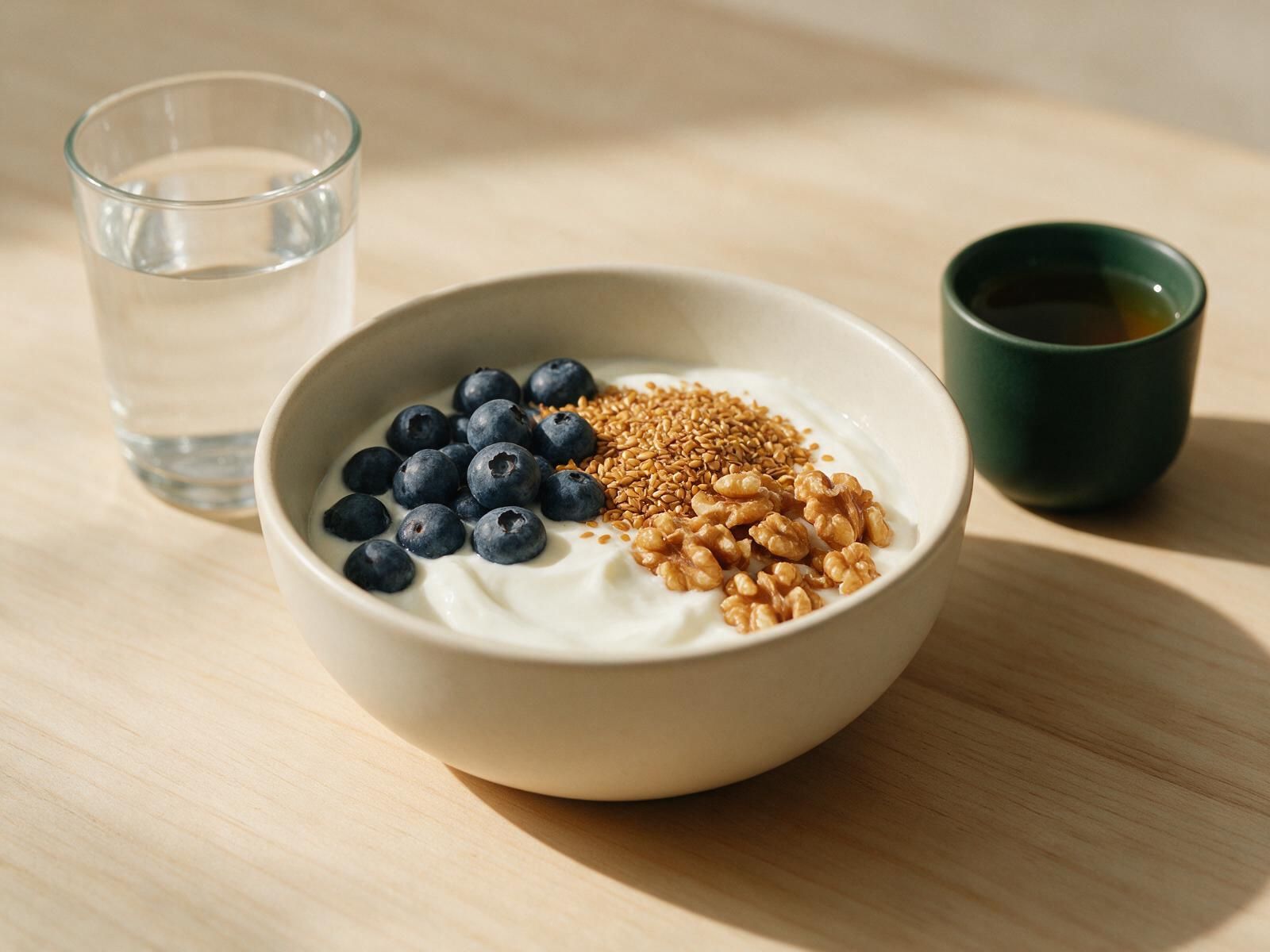
Skin health depends on many things (genetics, skincare, sleep, stress), and food is only one part. A varied diet rich in healthy fats, colourful plants and water supports the skin barrier. Some people notice certain foods make redness or breakouts worse; this is personal, so watch your own patterns rather than cutting out whole food groups.
Enjoy more
- Oily fish (salmon, sardines, mackerel) for omega-3 fats
- Colourful vegetables and fruit: carrots, sweet potato, tomatoes, berries, citrus
- Nuts and seeds, especially walnuts, flaxseed and sunflower seeds (vitamin E)
- Zinc-rich foods: pumpkin seeds, beans, eggs, lean meat
- Probiotic foods like yogurt and kefir
- Plenty of water and herbal tea
Limit
- Very sugary foods and drinks
- Alcohol, which can trigger flushing
- Very spicy food and hot drinks if they trigger your redness
- Large amounts of highly processed food
A sample day
| Breakfast | Yogurt with berries, ground flaxseed and walnuts |
|---|---|
| Lunch | Sweet potato and lentil bowl with spinach and pumpkin seeds |
| Snack | Carrot sticks with hummus |
| Dinner | Grilled mackerel or salmon with quinoa and steamed greens |
Helpful tips
- Keep a simple food and skin diary for 2–4 weeks before blaming any one food.
- Drink water through the day; dehydration can make skin feel tight.
- Sleep and stress affect skin as much as diet.
Check with your doctor
For eczema, rosacea, persistent acne or a suspected food allergy, see a doctor or dermatologist. Do not cut out major food groups without professional advice.
Get a plan built around thisNouri turns these suggestions into daily menus and a grocery list.
Get the appGeneral guidance for adults, not medical advice.